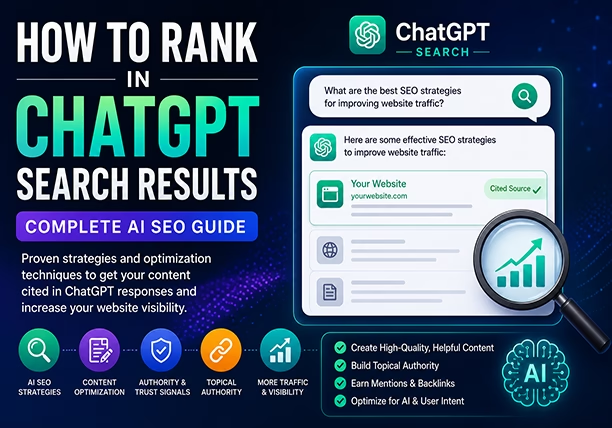
The way people search for information online is changing rapidly. For years, businesses focused primarily on ranking in Google and other traditional search engines. Today, AI-powered search platforms such as ChatGPT, Gemini, Perplexity, Claude, and Microsoft Copilot are becoming important sources of information for millions of users worldwide. As a result, marketers, bloggers, and business owners are increasingly asking the same question: How to Rank in ChatGPT Gemini AI Search Results?
Unlike traditional search engines that display a list of links, AI search tools generate direct answers by analyzing information from multiple sources. If your website becomes one of those trusted sources, your brand can gain significant visibility, authority, and traffic. This shift has introduced a new discipline known as Generative Engine Optimization (GEO), which focuses on helping AI systems understand, trust, and reference your content.
In this guide, you’ll learn exactly how AI search works, what factors influence visibility, and how to optimize your website to increase the chances of being cited by ChatGPT, Gemini, and other AI-powered search platforms.
Understanding How AI Search Engines Work
Before learning How to Rank in ChatGPT Gemini AI Search Results, it is important to understand how AI search engines operate.
Traditional search engines crawl web pages, index content, and rank results based on hundreds of ranking signals. Users then click one of the displayed links to find their answers. AI search engines work differently. They analyze a user’s question, identify the intent behind it, gather information from various sources, and generate a conversational response.
Instead of asking users to visit ten different websites, AI tools attempt to provide a complete answer immediately. However, these answers still rely on information from trusted websites across the internet. This creates a unique opportunity for websites that consistently publish valuable and authoritative content.
The goal is no longer simply to rank on page one of Google. The goal is to become a source that AI systems trust enough to reference when generating answers.
Why Ranking in AI Search Matters
Many website owners still focus exclusively on Google rankings. While Google remains important, AI search is becoming a major traffic channel that cannot be ignored.
AI platforms are increasingly used for product research, business advice, software recommendations, educational content, and problem-solving. Users trust these tools because they provide quick and detailed responses.
When your website is referenced by ChatGPT or Gemini, several benefits occur:
First, your brand gains credibility because users see it associated with authoritative answers. Second, visitors coming from AI platforms often have stronger intent because they have already received contextual information before clicking. Third, being cited by AI systems helps build long-term authority within your niche.
As AI adoption continues to grow, websites that adapt early will have a significant competitive advantage over those that rely solely on traditional SEO methods.
The Rise of Generative Engine Optimization (GEO)
What Is GEO?
Generative Engine Optimization (GEO) is the process of optimizing content specifically for AI-driven search systems.
Traditional SEO focuses on rankings. GEO focuses on citations and references.
The objective is to create content that AI models can easily understand, trust, and use when generating responses.
Why GEO Matters
As AI-generated answers become more common, websites need to think beyond keywords and backlinks. AI systems evaluate content differently. They prioritize clarity, accuracy, expertise, and usefulness.
Businesses that implement GEO strategies today are positioning themselves for future growth in the evolving search landscape.
Create Content That Demonstrates Expertise
One of the most effective ways to improve visibility in AI search is by demonstrating genuine expertise.
AI systems are becoming increasingly skilled at identifying authoritative sources. They can distinguish between generic content and content written by individuals or organizations with real-world experience.
For example, if you’re writing about SEO, don’t simply repeat information found elsewhere. Share actual case studies, campaign results, lessons learned, and practical recommendations based on experience.
When creating content, ask yourself:
- Does this article provide unique value?
- Does it answer real user questions?
- Would someone consider this content trustworthy?
- Does it demonstrate expertise?
The more useful and authoritative your content becomes, the greater the likelihood that AI systems will reference it.
Topical authority has become one of the most important concepts in modern SEO and AI search optimization.
Instead of evaluating individual pages in isolation, AI systems attempt to understand the overall expertise of a website. If your website consistently publishes high-quality content around a specific topic, it becomes easier for AI platforms to recognize your authority.
For example, imagine two websites:
Website A publishes articles about SEO, cooking, travel, fitness, and technology.
Website B publishes 100 detailed articles focused exclusively on SEO and digital marketing.
Which website appears more authoritative in the SEO niche?
The answer is Website B.
How to Build Topic Clusters
A powerful way to establish authority is by creating topic clusters.
If your niche is digital marketing, you might create:
Main Pillar Page
- AI Search Optimization Guide
Supporting Articles
- ChatGPT SEO Guide
- Gemini SEO Strategies
- GEO Best Practices
- Technical SEO for AI Search
- AI Content Marketing
- Future of Search
This interconnected structure helps AI systems understand your expertise and strengthens your overall authority.
Optimize Content for Search Intent
Many website owners focus heavily on keywords but overlook user intent.
AI systems prioritize content that satisfies the underlying reason behind a search query.
Informational Intent
Users want knowledge or answers.
Examples:
- What is AI SEO?
- How does ChatGPT Search work?
Commercial Intent
Users are evaluating options.
Examples:
- Best AI SEO tools
- ChatGPT vs Gemini
Transactional Intent
Users are ready to take action.
Examples:
- Buy SEO software
- Hire a digital marketing agency
Understanding intent allows you to create content that better aligns with user needs, increasing the likelihood of AI citations.
Structure Content for AI Readability
AI systems prefer content that is easy to interpret.
This does not mean writing short or simplistic articles. Instead, it means organizing information logically and clearly.
Use Descriptive Headings
Good headings help both readers and AI systems understand content hierarchy.
Create Logical Flow
Each section should naturally lead into the next.
Include Clear Answers
Whenever possible, provide direct answers before expanding with additional details.
Use Supporting Elements
Helpful content elements include:
- Examples
- Tables
- Statistics
- Case studies
- FAQs
Well-structured content improves readability while making it easier for AI systems to extract useful information.
E-E-A-T Is More Important Than Ever
Google introduced E-E-A-T as a framework for evaluating content quality. These principles are equally important for AI search.
Experience
Content should demonstrate firsthand knowledge.
Expertise
Authors should possess genuine subject matter expertise.
Your brand should be recognized within the industry.
Trustworthiness
Information should be accurate, transparent, and reliable.
To strengthen E-E-A-T:
- Add detailed author bios
- Include credentials
- Showcase case studies
- Display client testimonials
- Cite reliable sources
These trust signals help both users and AI systems evaluate your credibility.
Technical SEO Still Matters
Although AI search introduces new ranking considerations, technical SEO remains essential.
A technically optimized website provides a better user experience and helps AI systems access content efficiently.
Improve Site Speed
Slow websites create poor experiences and reduce engagement.
Optimize speed by:
- Compressing images
- Using caching
- Reducing unnecessary scripts
- Implementing a CDN
Mobile Optimization
Most users access content from mobile devices.
Ensure your website:
- Loads quickly
- Displays properly
- Offers intuitive navigation
Structured Data
Schema markup helps search engines and AI systems understand content context.
Useful schema types include:
- Article Schema
- FAQ Schema
- Organization Schema
- Author Schema
- Review Schema
Structured data improves content interpretation and visibility.
AI systems often consider broader web signals when evaluating trustworthiness.
Guest Posting
Publishing on respected industry websites increases exposure and credibility.
Digital PR
Mentions in news publications strengthen authority.
Podcasts and Interviews
Sharing expertise through interviews helps establish thought leadership.
An active presence on professional platforms contributes to brand recognition.
Authority is not built solely through your website. It is built across the entire digital ecosystem.
Why Original Research Is Powerful
One of the best ways to increase AI citations is to publish original research.
AI systems frequently prioritize unique information over content that simply repeats existing ideas.
Examples include:
- Industry surveys
- Case studies
- Performance benchmarks
- Market analysis
- Customer research
Original data makes your content more valuable and more likely to be referenced.
Common Mistakes That Hurt AI Visibility
Many websites struggle because they continue using outdated SEO practices.
Publishing Thin Content
Short articles with little substance rarely provide enough value.
Overusing Keywords
Keyword stuffing reduces readability and trust.
Ignoring User Experience
Poor navigation and slow load times negatively impact engagement.
Publishing Unedited AI Content
AI-generated content should always be reviewed and improved by humans.
Neglecting Content Updates
Outdated content becomes less useful over time.
Avoiding these mistakes improves both user satisfaction and AI visibility.
Measuring Success in AI Search
Unlike traditional SEO, tracking AI search performance requires a broader approach.
Monitor:
- Organic traffic trends
- Referral traffic
- Brand mentions
- User engagement
- Conversion rates
Pay attention to increasing brand visibility across AI platforms rather than focusing solely on rankings.
Over time, strong authority signals often lead to better visibility and more qualified traffic.
Frequently Asked Questions
Can websites rank directly in ChatGPT?
ChatGPT does not display traditional rankings, but websites can be referenced and cited within generated responses.
Does traditional SEO still matter?
Yes. Traditional SEO remains the foundation of visibility and discoverability.
What is GEO?
Generative Engine Optimization is the practice of optimizing content for AI-powered search engines and assistants.
Can small websites appear in AI search results?
Absolutely. High-quality, authoritative content can help smaller websites earn citations.
Are backlinks still important?
Yes. Backlinks remain valuable trust and authority signals.
Conclusion
Learning How to Rank in ChatGPT Gemini AI Search Results is becoming an essential part of modern digital marketing. As AI-powered search continues to evolve, businesses must move beyond traditional SEO and focus on creating content that demonstrates expertise, authority, trustworthiness, and genuine value.
The websites that succeed in AI search will be those that publish comprehensive content, build topical authority, optimize technical SEO, and consistently provide useful information that helps users solve real problems. By implementing the strategies outlined in this guide, you can improve your chances of being cited by ChatGPT, Gemini, and other AI search platforms while building sustainable long-term traffic and brand authority.
The future of search is not just about rankings—it is about becoming a trusted source of knowledge that both users and AI systems rely on.